Showing posts with label travelling. Show all posts

Sunday, February 28, 2010

Weekend in Beirut


I went to Beirut this weekend for a quick trip. The visit was prompted by one of my colleagues who is heading back to Canada this week; he had never been and expressed an interest in going. I was hoping for Damascus instead, but another fellow pressed for Beirut, and so it was. The three of us boarded a plane Thursday evening and one hour later we were there.

From the first moment, the trip was an unexpected joy - a cheap flight on Royal Jordanian , no visa requirements and no hassle at the Beirut airport (a happy surprise). One companion is an architect, the other a historic preservation expert and we made excellent travelling companions: same interests, same pace, same tastes. Our shared top priorities were: good coffee, good food, good wine, at least one good bar and lots of walking in the city.


We found it all, and then some. Beirut was a beautiful, beguiling place. We kept trying to pin down what we were seeing. Some comparisons included: Paris (amazing cafes, intellectuals and universal French chic); Marseilles (edgy port city, salty sea air and amazing seafood), Belgrade and Istanbul (grand city of the Ottoman empire filled with boulevards, ancient minarets and byzantine churches); Berlin (the scars of the war, the green line between north and south beirut, the underground culture), Montreal (the beautiful young people, the club and bar scene), all in the context of an arabic speaking, middle eastern city filled with funky 60s modern buildings.

We stayed in the neighbourhood of Gemmayzeh/Jmeyzeh (depending on how you choose to spell it...) on the edge of the former battleground that divided the city during the civil war. The evidence of bullet holes and shell damage still persist years after the end of the war. (Pictures below of bombed out buildings and cinder block facade repairs). Despite the scars, the neighbourhood is booming with restaurants, bars, art studios, local shops, and the like.


We walked everywhere: across the green line, through the revitalized and completely repaired downtown - with the most beautiful flower plantings I have ever seen anywhere - and into the Hamra district in South Beirut and along the sea wall "corniche" boardwalk looking out over the mediterranean. The food was absurdly good everywhere we went - from lunch counter experience (fresh flatbread and local cheese and olives) to slow food restaurant in the evening. We collectively had one of the best - if not THE best - meals of our lives in a wonderful restaurant called Bread. I intend to go back.

After walking the city for a day and a half, we hailed a cab on Saturday afternoon and headed north up the coast to see the port of Byblos - founded by the Phoenecians 7000 years ago. Layers of historical remnants remain - the original Phoenecian port and sea wall that created an amazingly sheltered harbour on the rough mediterannean coastline; greek temples; roman baths and colonades; early Christian churches; and later medieval ramparts topped off by a crenellated castle built by the crusaders in the 12th century.

We returned to Amman on a late flight, talking all the time about how we might be able to swing a 6-month assignment back in Lebanon. We landed at the airport at the same time as a flight from the Gulf - Dubai or Jeddah or Abu Dhabi - and realized that we hadn't seen a man in a keffiyeh (headscarf) and white dishdashah (long tunic) the whole time we were there. It came as a surprise and a reminder: we were gone from the mediterranean and back in the land of the bedouin.

Monday, February 22, 2010

new digs, old buildings


I moved on Saturday to the downtown Jebel Amman neighbourhood. These are a few pictures of the new apartment and its view.


The neighbourhood is great, the space is large, the floors are marble - which is very cool in warm weather - and the furniture is "habibi" style - ornate beyond your wildest dreams. I am particularly relishing sleeping in the "Louis XV" by way of The Brick bedroom suite.

As for the view and the neighbourhood, in the nighttime view above, the faint green-ish lights demarcate all the local mosques. My first night here, I sat out on my balcony and listened to the different calls to prayer echoing through the valley. Other worldly and beautiful. In the distance, the columns and dome that are on the top of the opposite hill - Jebel Hussein - is the citadel, a protected area that is a mixture of Roman and early Islamic ruins.

After moving my (meagre) stuff last weekend, I went on a site visit to the north with a consultant who is also working here. He was doing some surveying work. I was tagging along. After driving around the municipality, we meandered down a few dirt roads, and at the peak of an out- of-the-way hill, on the outskirts of a little village, we came across some old stone structures. Probably the original village, the buildings are many hundred years old or likely more. This cluster of buildings should probably be on a protected list, so we checked with our colleague working on historic preservation. She had never heard of the place.

The village's more recent settlers simply take the original buildings for granted, allowing them to slowly weather the passage of time. Now lacking roofs and with walls tumbling in, they serve a variety of purposes: sheep sheds, donkey stable, random storage. Here are a few more pictures:


Tuesday, February 16, 2010

bird song, wolf tracks

I am back in Amman after a long flight which involved a lengthy delay in Istanbul. Wow, that is one busy airport. Living in North America, one tends to forget the role and scale of cities like Istanbul: a place that has served for centuries as a regional hub, the ancient seat of an empire, 5x more people than Toronto. The airport has a continuous stream of final boarding announcements to mysterious (to me, at any rate) destinations like Doha, Muscat, Tashkent, Tehran. Spending 6 hours there reminded me of Prague's Ruzyne airport in 1990, where the giant, clattering, digital departure board spelled out destinations like Ho Chi Minh City and Ekaterinberg and Donetsk. Names you never witnessed (at the time) in North American or Western European airports.

Back in Jordan, I have arrived to springtime. 20 degree temperatures, early flowering trees like apricots and almonds in blossom, and birdsong from first light. 2 days in, I am still waking up at the first call to prayer - at 4:30am or so. Unable to get back to sleep, I read my book, watch the sun rise and listen to the birds. As the jet lag eases, I expect I will start to sleep through the night. When I came last time, I knew I was on regular time when I started to sleep through that first call to prayer (thank you, God). A family of songbirds is doing their best to prevent that, however: they have nested in the building's airshaft and their chirps echo into the apartment's (three) vented bathrooms and throughout the apartment from the early morning onwards.

I came back to a full house here in Shmeisani. When I left Amman, I had been living in the apartment alone - with another colleague living in a unit downstairs. Now both apartments are full to bursting with the consulting team - 2 others here with me, another 3 downstairs. All are very lovely fellows and there is a nice, social atmosphere. I have learned that foreign consultant living is a little bit like civilized university dorm living, at a higher salary. I like it, but to get a bit more of my own space back, I will move this weekend to an apartment in downtown Jabal Amman. This upcoming apartment (my third in as many months) overlooks the Roman citadel and is old and big and ramshackle and affordable - a bit like my apartment in Toronto. It is probably too vast for one person with 3 bedrooms, 2 bathrooms, a big eat-in kitchen and 2 living rooms (standard in this country where a strict distinction is maintained between the formal place you entertain guests and the cozy place you share with your family - a tradition that I gather dates back to the bedouin tents). So I will indeed get a lot of my own space back. I will look forward to visitors! Photos are forthcoming.

The shirtsleeves temperature and blooming gardens couldn't be more of a contrast to my time last week in Canada, especially Deep River, which was cold and snowy and beautiful. I am hanging on to the memory of cross-country skiing across the Ottawa River to Quebec and seeing dozens of wolf tracks criss-crossing the ice along the way. After returning to Amman, I got an e-mail message from my brother saying that a person who had been skiing along the river a few days after I was there, suddenly found himself surrounded by 5 wolves. (Does that constitute a pack of wolves?). This was in the daytime. I have never heard of this happening before. He scared them off but it was a sobering experience, I'll bet. When I tell this story to my Jordanian colleagues - and that it might just as easily have been me surrounded by wolves - I can tell that they don't think it is neat or interesting that there are a lot of wolf tracks out there in the snow. Or that there is snow at all. Crazy Canadians.

Thursday, February 4, 2010

A Change of Scenery

I am in my hometown of Deep River, Ontario for a week, spending time with my mother who recently had hip replacement surgery. (She is making excellent progress). It’s cold here – minus 20 celsius or so – and underneath a 5- centimetre layer of dry, powdery snow, there’s a thick foundation of ice from a freezing rain storm two weeks ago. It is too treacherous for my mother to go out, so I am spending my time running errands like going to the library and the post office and the health food store in the mornings, and getting out into the bush or onto the frozen Ottawa River on my cross-country skis in the afternoon. I am not sure if there is place on the planet more fundamentally different from Amman.

Chatting with neighbours, sitting in the doctor’s office waiting room, or waiting in the grocery store check-out line, there are two topics of conversation that have the town abuzz. The first is the upcoming ‘Silver Spoon’ cross-country ski race this weekend that annually attracts competitors from across the province. The second, and vastly more interesting topic, is the disappearance two weeks ago of a local resident who has vanished without a trace. A 41-year-old man, single, originally from Australia was invited to a dinner party on a Sunday night (or so the story goes) and failed to show up. When he didn’t answer his phone, the hosts went to his house to find his lights on, wallet on the table, no signs of violence, but no signs of him, either. The Deep River police were called, and, in turn, the OPP. The search was on.

In addition to pasting up missing person signs up all over town, the OPP also pulled out their fleet of snowmobiles and proceeded to tear around the bush, looking for signs of the vanishing man. This is where the two topics of conversation collide: it turns out that in all their enthusiasm, the policemen dashing around on skidoos ruined the lovingly groomed ski trails. The town’s cross-country skiers and race organizers are livid. How can things be put to right in time for the race this weekend!? Outrage!


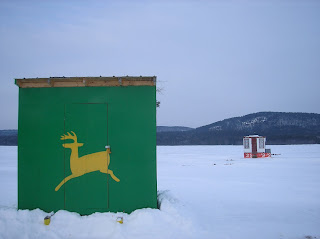
Truth to tell, I haven’t seen evidence of the destruction where I have been skiing, but there is nothing like a good story to spread around a small town to keep conversation lively, especially when the police are involved. Meanwhile the fellow is still missing. Maybe he has holed up in an ice-fishing hut in the middle of the Ottawa River to wait out the winter?


Friday, January 1, 2010

new year - new words

It is 2010!

I have learned that like Christmas, New Year's is not really a big celebration here. It's nice - just another normal social evening, so there is no big pressure to "do something" the way there can be back home. I liked that - it was a relief.

That being said, I was actually invited to two different events last night to ring in the new year. One was for an outdoor gathering on the beautifully named Rainbow Street in Jebel Amman - a lovely part of town in the old city centre that comes closest to being 'hip' in a western sense and rapidly gentrifying as a consequence. Apparently it was the first time ever that a new year's eve was to be celebrated in an outdoor public open space. Like Time's Square, only smaller. About 100 people were expected. People in my office were excited at the prospect of such a public gathering.

The second, equally lovely, invitation was to the home of the brother of a colleague where a group of friends was gathering to celebrate. This group is an accomplished bunch, well-travelled, well-educated, and well-placed in all kinds of senior positions in government and business. I was curious to meet the brother. The family is originally from the west bank town of Nablus, but the siblings ended up in different countries throughout the region.

The brother lived in Baghdad for more than 20 years working as an engineer and his wife for the UN. They left a couple of years ago, the current instability finally pushing them out. They left everything - their house, furniture, cars - and cannot get anything back. There are no records left in Baghdad of the family ever having lived there, so reclaiming these belongings, for the time being anyway, is impossible. And so they have begun anew here in Jordan, building a new house, setting up again. (As an aside: it is really interesting how porous the regional borders are for well-educated people ... the number of people I have met who grew up here, studied in Beirut, lived in Damascus, spent some time working in Abu Dhabi or Dubai or Baghdad, and ended up in Amman - or some combination thereof - is impressive).

In the end, I accepted neither of these kind invitations, as nice as they were. I moved into a new apartment, instead - same building, different floor, more light, nicer layout. And I was tired after a long week, so I went to bed early, slept a long time and greeted the new year feeling sunny and fresh - like the day itself.

To make the most of January 1st, I headed 50km north to investigate some more Roman and Byzantine ruins. Again there was sunshine and cardomom-scented coffee and bedouin shepherds steering goats through the ruins. And delight as I watched my taxi driver, the excellent Ahmad, play soccer with some street kids in a first century amphitheatre. Ahmad made me realize that I am actually learning some arabic. He spoke very little English and let me practice my best phrases like "i'd like coffee, thank you" and taught me new words to name the things we were seeing around us - pomegranates, sheep, olive groves, lemon trees, churches, columns. A curious vocabulary.

And so 2010 begins. No pictures of ruins today, as I misplaced my camera this morning. Instead a picture with some nice fellows Hashem and Hussam - tourists from Iraq - who I met last weekend when we were all hiking on a trail overlooking the dead sea. Proof I am really here.

Wishing everyone peace, prosperity, good health and happiness for the new year! H


Saturday, December 26, 2009

roads to Rome


I spent Christmas day in the town of Madaba. Madaba is mentioned in the bible, an ancient city, and also a very contemporary one. It houses one of Jordan's large Palestinian refugee camps and is a busy, happening place.

One of the things that drew me there is a renowned 15 metre x 6metre mosaic map that dates from the 6th century. The map, embedded in the floor of a Greek Orthodox Church, depicts the holy land as it was at the time. It shows the towns and villages and key pilgrimage sites in extraordinary, geographically correct detail, using designs to show water courses and valleys and mountains that are beautiful and functional too.

The centrepiece of the whole mosaic is Jerusalem, depicted painstakingly. All the ancient gates to the city - the Jaffa gate, the Damascus gate, etc. - are shown precisely. The standout feature is the colonaded roman road running straight through the centre of town, end to end.

On Christmas day, the church was thronged with tour groups from all corners of the world - India, Germany, the US, Japan. It appeared to be a regular stop on the guided tours to the holy land for religious folk. Lots of people snapping pics like the one above. (Something I learned: mosaics are hard to photograph.) I stayed a while and then gave up on the crowds and decided to check out the other sites in town.

Walking down a narrow street, I noticed a gate with a sign that said "Departemenet (sic) of Antiquities". I pushed on the gate and it wasn't locked, so I stepped in. Unlike the crowded church, there wasn't a soul. It was a cross between a garden and a rubble heap, interspersed with more mosaics. I figured out from the guidebook that it was a place called the 'burnt palace' - the partial ruins of a roman patrician mansion and a jumble of neighbouring buildings. I wandered in the incredible stillness, soaking in the heat of the sun. The aging caretaker came and informed me that the site was closed today, but 'please, stay, stay, no problem.' Then he offered me coffee and we sat on the roman ruins and he showed me pictures on his cell phone of his son and six daughters.


Sitting there, it took me a while to figure out the place and what I was seeing. But slowly it dawned on me that I was looking at a Roman road and what remained of the buildings that fronted on to it. The road is in perfect condition - flat, straight, unrutted - made from huge slabs of white limestone. 2000 years later and 2500 kilometres from the city of Rome, it is still there. It runs through the back yards of people's properties - like some kind of back alley - and the back of the mosque edges on to the ruins.


the new Madaba, the fragments of mosaics, the old enduring road make me think both about permanence and the fleeting nature of things. Layers of history piling up, fragments left, disregarded, but always there, in the back yard, as a reminder.


Tuesday, December 22, 2009

the biggest christmas tree in the middle east


This 26 metre (fake) Christmas tree is set up in the centre of town of Fuheis in the middle of some beautiful Roman ruins. The proud mayor of the town lays claim to having the largest Christmas tree in the middle east - a story which made the front page of the Jordan Times this week, so it must be true. The whole town, which is majority Christian, celebrates this holiday with ardour - lots of lights and tinsel-y decorations and fir trees (imported, surely) in front yards. It is both over the top and comforting at the same time.

So in the same spirit of all Fuheis, from the heart of the holy land where the whole thing started, I wish you all, dear readers, a very merry Christmas and a happy new year. HE


Sunday, December 20, 2009

voyage to the Dead Sea


This past weekend I was asked to participate in a strategic planning retreat for work. To my delight, the event was arranged at the swanky Movenpick hotel on the shores of Dead Sea. I decided to head down early on Friday several hours before the opening dinner to see what's going on down there at the world's lowest point on land below sea level.

Driving there in the van with a couple of colleagues made me realize how much time I have been spending looking at sprawl since I got here. Unexpectedly, driving southwest out of Amman - a new direction for me - the city ended abruptly and we were suddenly passing through a wide open landscape of steep hills, terraced olive groves and deep valleys. A sight for my sore eyes.

And then we started to go downhill. One of the women I was travelling with offered me gum. I declined. She insisted... 'really, it is for your ears, they will feel the pressure.... like in an airplane...". Amman is indeed on a deceptively high plateau and though the Dead Sea is only 30 minutes away by car, it is a completely different climate and at a much, much lower altitude. In Amman, it was 6 degrees C, rainy, foggy and overcast when we left; half an hour later, when we reached the bottom of the steep hill into the Jordan river valley where it opens into the Dead Sea, the sky was clearing, sun was streaming , the humidity was rising and the temperature was a balmy 17C.

Suddenly there were banana plantations and orange groves and flowers and lush vegetation. And signs for the baptism site of Jesus. And weird rinky dink souvenir shops. And lots of plain clothes and uniformed security people because of the proximity to a certain neighbouring country. And the Dead Sea itself.

December 18th is not a peak season for swimming but there were a few other ridiculous tourists like myself (mostly German) who couldn't resist the water. We bobbed along in the briny sea. Fantastic feeling floating weightless. Amazing oxygen-rich air.

Will definitely do it again - highly recommended.

Tuesday, December 8, 2009

what I now know about camel husbandry


The weekend here starts on Friday and people go back to work on Sundays.

This past weekend, I had been planning to stay in Amman - after only being here 3 days - and settle in a bit, get my bearings, check out the downtown and a few neighbourhoods.

That plan went awry when another Canadian colleague, a truly intrepid global traveller, asked me if I wanted to go camping under the stars in Wadi Rum, a protected desert area sparsely populated by traditional bedouin communities. My guidebook describes it thus: "rugged and majestic, simply one of the world's
most alluring desert destinations. Think towering cliffs, red dunes and sleeping under the stars."

The opportunity was too good to refuse. We headed out early Friday afternoon, arriving at the Wadi Rum visitor's centre as the sky was getting dark (night falls at 4:15pm here!). Soon we were in the protected area and off to find a spot on the vast desert floor to call our own.

It became clear, quite quickly, that the desert is a big place and, fortunately for us, help came in the person of Raad, a young bedouin man. He assisted us in finding a camping site that night and served as our guide the next day. Raad was simply fascinating on the topic of camels.

I learned that the camels you see wandering about in the desert in herds - who look like they might be wild - are actually domesticated
animals who provide milk. These camels wander out into the desert unaccompanied for 2 or 3 or 4 days at a time, eat whatever sparse vegetation is to be had, and eventually wander back to their homestead or to a nearby spring to have some water. When a camel doesn't show up for more than 4 days or so, then the owner goes out looking for her to make sure everything is ok. The desert floor is covered with millions of camel hoof prints. Raad said that when looking for a lost camel, his father (but not himself) could identify all of his own animals just based on their shape of their individual hoof prints and track their trajectory in that way.

I also learned that racing camels are another category altogether. Raad is an avid camel racer and in a show of great hospitality took us to his encampment to meet his winning camel Wolf - along with the rest of his 'stable'. Though still a young man - age 22 - Raad had a going concern with these racing camels and even had a hired hand to tend them. (The hired hand was a young teenager from Sudan. I couldn't help but wonder how he had found his way to this remote community in Jordan's desert and what his personal journey must have been.)


These camels are smaller and sleeker than the
milk camels. And they don't get to wander. They are tethered and covered to ward off sun stroke, and muzzled to prevent them from eating any junky desert food. They are fed special diets, watered daily - not every four days - and are taken out for exercise frequently and for a fast run on Fridays. Raad showed us an awesome cell phone video of Wolf winning a race - which he had set to music. It would be a youtube sensation. He also bemoaned the fact that in Saudi Arabia, they substantially subsidize camel food which puts
Jordanian camel racers at a permanent disadvantage.

Unfortunately I didn't learn anything about the camels that are used for daily transportation - but did see a lot in action. One vivid memory is from shortly after sunrise seeing a woman in a black hijab and flowing black gown riding on a white camel across the desert expanse. I didn't get a picture. She had somewhere to get to and sailed calmly on.