Thursday, September 9, 2010
The Holy Month
We are almost through the whole holy month of Ramadan. Today is probably the day, but for sure sometime this weekend the end will be announced. Still to be determined. In any case, the whole city is inching closer by the minute to the big Eid celebration that marks the end to the month-long fast. My neighbourhood is about to get very loud.
It was my first time spending Ramadan in a predominantly muslim country and, in retrospect, it is amazing to me how little I knew about this major religious festival that 20% of the world's population observes. It was humbling being a total outsider. Back in the home country, I am surprised by people who know nothing about Christmas traditions. How can a person live their life without ever knowing about Christmas trees, say? I was that person here. I knew nothing about Ramadan, shockingly ignorant. The sum total of my knowledge prior to coming here was that people don't eat during the daylight hours.
Well it is true that people who are observing the fast don't eat from about 4:00am - when a "pre-call" to prayer from the neighbourhood mosque alerts people that they better eat now or wait til later - until after the evening call, around 7:15pm. They also don't drink any liquids during the day - which was tough this year, when Ramadan coincided with the worst heat wave in recent history. And no cigarettes or sex during the day. And so on. So, kind of a full body - full conscience cleanse each and every day for a month.
Because it is an officially observed, state sanctioned festival there are quite a few legal rules that go along with the observance. Needless to say all the liquor stores are closed for a full month - absolutely no selling of alcohol. You cannot eat or drink outdoors. That means no restaurant patios, no snacking or sipping drinks on your balcony at home during daylight hours, no quick sip from a water bottle in your back pack if you are walking down a hot dusty street and feeling dehydrated. In the workplace in city hall, the big drinking water dispensers were all emptied and removed on the first day of Ramadan and the kitchen was shut tight as a drum. In addition to legal issues around ingesting food or drink in a public office, it is also considered deeply offensive to those who are fasting, so there are strong social pressures to maintain solidarity with your coworkers.
There are a few workarounds, of course. There are special 'tourist licenses' that some businesses can get so they can continue to serve food and drink during the course of the fasting hours. (With their shutters very, very closed to outside view). And at work, the non-fasters could lock themselves in empty offices to have a snack or a drink that they brought in from home. I have to say, though, that not being able to drink my 6 glasses of water a day at my desk meant I was really dehydrated and limp at the end of a work day. And not being able to drink my quota of coffee in the mornings had very, very negative side effects for my colleagues in the first weeks. And I wasn't even fasting.
Now with all of those rules - which I had started to learn about in the weeks and months before the fast began - I had a picture in my mind of a very solemn month. This is probably because I connect religious fasting with the Christian observance of Lent with its emphasis on penance and reflection on Christ's pain and suffering. So I had been imagining a month of self- denial and quiet reflection. Boy was I wrong.
The first indication that I didn't quite get what I was in for, happened on the first night of the festival back in mid-August. The actual start date - like the end date now - was shrouded in a bit of mystery - would it be Tuesday? Would it be Wednesday? It all depended on when the powers that be saw the moon. The night they did see it - boom - Ramadan was announced with incredibly loud cannon fire from the citadel hill, followed by mass fireworks from rooftops and balconies, and children spontaneously running out into the street chanting 'Ramadan, Ramadan!' It was joyful. The coloured, blinking decorative ramadan lights came on in windows all over the city. The extremely nostalgic, affective Coca-Cola Ramadan ads came on TV - kinda like the old "i'd like to teach the world to sing" Christmas one that they used to do. People were filled with a charitable, celebratory spirit. The whole city got loud and stayed loud til 4am.
And so it was every night after that. At about 10pm, after the evening 'iftar' meal which breaks the fast, the streets filled up. Music, singing, card games. The cafe across the street from my house had a live band and bingo game every night on the terrace til about 3am. People had social obligations at midnight... 1 am.... 2am. Meanwhile, the more observant were spending a lot of time in the mosque in the evenings for the reading of verses of the koran. Over the course of the month, all of the verses must be read, and many mosques broadcast the work in progress, which adds to the general noise level.
All of this night time activity means that people are exhausted at work in the day time. Myself included - it was hard to sleep in all the noise. And many businesses totally flip their hours - closed during the day, open at night. Some people stay up all night after iftar to eat their second meal in the wee hours of the morning at 3am/ 3:30am and then catch a few winks before getting to work at 9am or 10am. Now, at the end of the month, the noise level has died down considerably. Largely, I think, because people are too exhausted and dehydrated to keep up the merriment.
So at this point - today? tomorrow? - I will find out what the Eid festival is all about. I am imagining more music, dancing, eating, drinking in public and even more chanting and fireworks. But who knows. I will probably be surprised. Actually, to get a bit of a break, I am heading out to the stark eastern desert tomorrow morning for a couple of days to see Umm Al Jimal, an ancient, abandoned Roman town carved from black basalt rock. Perhaps there I will encounter the quiet and solemnity I have been imagining?
Sunday, September 5, 2010
my walk home
I love my daily walk to and from the office. It never fails to be interesting. The morning walk is quick - over the crest of the Jebel Amman hill and down two flights of precipitously steep stairs through a partially demolished informal refugee settlement - takes about 10 minutes. Lots of cats finding a place to settle for the day and neighbours taking care of morning tasks.
The evening walk, circling around the bottom of the Jebel Amman hill through the city's old 'souk' and up a gentler hill and kinder set of stairs, takes more like 30 minutes. Usually longer if I stop to watch things or shop in the covered food market.
Here are a few quick pics from today's walk home.
The first part of my walk home through the old town takes me through the awning fabric part of town. Shop after shop with big open doors and filled with giant bolts of striped and plain awning fabrics. Men on the sidewalk sitting at foot-pedalled industrial sewing machines, surrounded by masses of fabric tumbling in folds around them. Today one of the shops was using the sidewalk as a cutting board, with the ever-present guys on the side offering advice. Love the brilliant blue sheen of the plastic fabric - wonder what it will be used for.
Later, up the hill, I come by the cats - a regular encounter around 6pm. Two middle-aged men who live in a very tumbledown house perched at the edge of a cliff where they keep pigeons and geraniums have adopted a neighbourhood colony of feral cats. They buy cheap ends from the butcher and feed the cats every evening. This is not a cuddly relationship - no gentle stroking or tame purring going on. It is all about a bucket full of meat and a lot of hungry cats. But the humans and cats in this story seem to need each other anyway and none of them mind me hanging around watching, taking a few pictures.
So that was today's walk. Every night there is something worth stopping to watch.
I have been slow on posting these days - I attribute it to heat and dehydration - but another one coming soon about the Holy Month of Ramadan, soon to come to a close.
The evening walk, circling around the bottom of the Jebel Amman hill through the city's old 'souk' and up a gentler hill and kinder set of stairs, takes more like 30 minutes. Usually longer if I stop to watch things or shop in the covered food market.
Here are a few quick pics from today's walk home.
The first part of my walk home through the old town takes me through the awning fabric part of town. Shop after shop with big open doors and filled with giant bolts of striped and plain awning fabrics. Men on the sidewalk sitting at foot-pedalled industrial sewing machines, surrounded by masses of fabric tumbling in folds around them. Today one of the shops was using the sidewalk as a cutting board, with the ever-present guys on the side offering advice. Love the brilliant blue sheen of the plastic fabric - wonder what it will be used for.
Later, up the hill, I come by the cats - a regular encounter around 6pm. Two middle-aged men who live in a very tumbledown house perched at the edge of a cliff where they keep pigeons and geraniums have adopted a neighbourhood colony of feral cats. They buy cheap ends from the butcher and feed the cats every evening. This is not a cuddly relationship - no gentle stroking or tame purring going on. It is all about a bucket full of meat and a lot of hungry cats. But the humans and cats in this story seem to need each other anyway and none of them mind me hanging around watching, taking a few pictures.
So that was today's walk. Every night there is something worth stopping to watch.
I have been slow on posting these days - I attribute it to heat and dehydration - but another one coming soon about the Holy Month of Ramadan, soon to come to a close.
Sunday, August 22, 2010
summer vacation
I am back in Amman after a lovely vacation in the long summer light and cool shade of northern Europe. Back in Europe, the weather was perfect. Here in Amman, the plane landed in the early evening in 43C/110F degree heat and - atypically - no breeze. It's stifling. My cold water taps are running hot as the sun bakes the water cistern on the roof. I am bathed in sweat and the feeling of clothes on skin is close to intolerable. Small wonder Adam and Eve - living just next door by the Euphrates River - ran around naked.
So, in addition to being a nice summer vacation, my trip was a wonderful break from all this heat - calm, cool, green. I spent time in Amsterdam with some friends where we enjoyed bikes, book stores, great food and excellent wine consumed in gardens and on beautiful, leafy, breezy terraces. To the amusement and puzzlement of my friends, my whole first day in Amsterdam was spent staring at and commenting on trees - their size, greenness, amazing variety and incredible beauty. In retrospect, I was experiencing a little bit of cultural dislocation...
Amsterdam was then followed by some glorious days on the island of Vlieland in the North Sea, two hours by ferry from the mainland.
Much of Vlieland is a nature preserve/ bird sanctuary with wild dunes and amazing, pristine white sand beaches and big surf. It is car-free - with the exception of service vehicles - and the one little village of Oost-Vlieland is straight out of a Dutch picture postcard with a long main street lined by 17th century brick houses, happy Fries horses grazing in green fields, and a big harbour filled with traditional sailing barges. Basically: my definition of paradise.
(The only thing slightly off-putting on Vlieland: the blondeness! I started keeping track of the blonde to brunette ratio in public places - restaurants, shops, etc. - usually around 3 - 4 blondes for every dark-haired person. And let's not even talk about the blue eyes to brown eyes ratio - even more extreme! It made me realize I was experiencing a way of life enjoyed by a minutely marginal subset of this global population. Which in its own way felt like fascinating cultural anthropology: observing leisure behaviours in the traditional summer habitat of the northern european.)
As always happens when I am there, Amsterdam got me thinking about cities and the ingredients that make great places. It's all going on there - interesting streets, wonderful parks, great architecture that is always changing, ever new - without uprooting the old - and that amazing transportation network - cycling heaven. I made a special request of my friend to spend at least one day seeing art - not something I do very often in Amman. Originally we had planned to go to Rotterdam to do that - since many of the major galleries and museums in Amsterdam are closed for renovations - but in the end we stayed put and toured some smaller spaces and interesting corners of the city.
We took off on our bikes at 10am and spent the day roaming around the city. We saw some nice work and that was a pleasure. But here's what this tour mostly helped me realize: the city of Amsterdam has really figured out how to reuse and recycle its urban spaces. And fast. And in an incredibly creative, fearless and (compared to Toronto, anyway) non-fussy way.
We went to the FOAM, the Photograph Museum of Amsterdam, and, later, to the Huis Marseille, a private photography museum. These are both located in lovely historic 16th or 17th Century Canal houses that have been converted into art galleries. There is nothing particularly novel about historic houses being turned into galleries in this way - these two just happen to be superbly located and beautifully done.
The biggest revelation of the day for me, though, was a trip to the Noord neighbourhood - a quick hop on the ferry across the river. This part of town is seeing a lot of change - a formerly industrial neighbourhood of large factories slowly turning into residential enclaves or light industry. A similar tale to other de-industrializing cities in Western Europe and North America.
Here's what I saw that I loved: a willingness on the part of officialdom to turn this part of town over to young people, and often creative people - architects, artists, designers, skateboarders, whoever - to shape the neighbourhood.
In part this is being done by providing incredibly cheap housing in refurbished shipping containers. In part through handing over an abandoned - and vast - former shipbuilding factory - a giant hangar, really - over to a group of artists who have rebuilt the interior, serviced it, plumbed it and turned what was fallow space into a network of studios. Plus a skate park, filled with teenagers, who are using the space in another cool way. Great things are brewing
It makes me think a lot about how a city goes about creating new neighbourhoods from brownfields. Maybe its not by spending lots of money on a waterfront park or a stadium, say, but by attracting and handing control over to smart, risk-taking, young people. The kind of people that other people want to be around.
After our day out on the town, we rode back home to my friend's place - a converted 19th century schoolhouse that has been turned into art studios and a daycare and co-op apartments - and there we had a nice glass of wine on the roof terrace. A day well spent.
As another aside: when I was in Amsterdam, I was interviewed on the topic of cities and the environment by Radio Netherlands Worldwide for their weekly radio program "Earth Beat". If you are interested in hearing my voice (which personally makes me cringe!) here's the link below. Click on the most recent episode entitled "Cities That Work":
http://www.rnw.nl/english/radioprogramme/earthbeat
Sunday, August 8, 2010
Life Goes On
It is 9pm and the stars are out. After a searing hot day in the mid forties, the temperature is hovering around a pleasant thirty degrees celcius and a lovely breeze is blowing. Without question, the early evening is the best time of day here. A friend just got back to Amman after a month-long summer holiday in Scotland and Provence. I asked her if she missed anything when she was away. "The colour of the sky at dusk," she said, "and the incredible calm that happens in the evening amidst all the chaos."
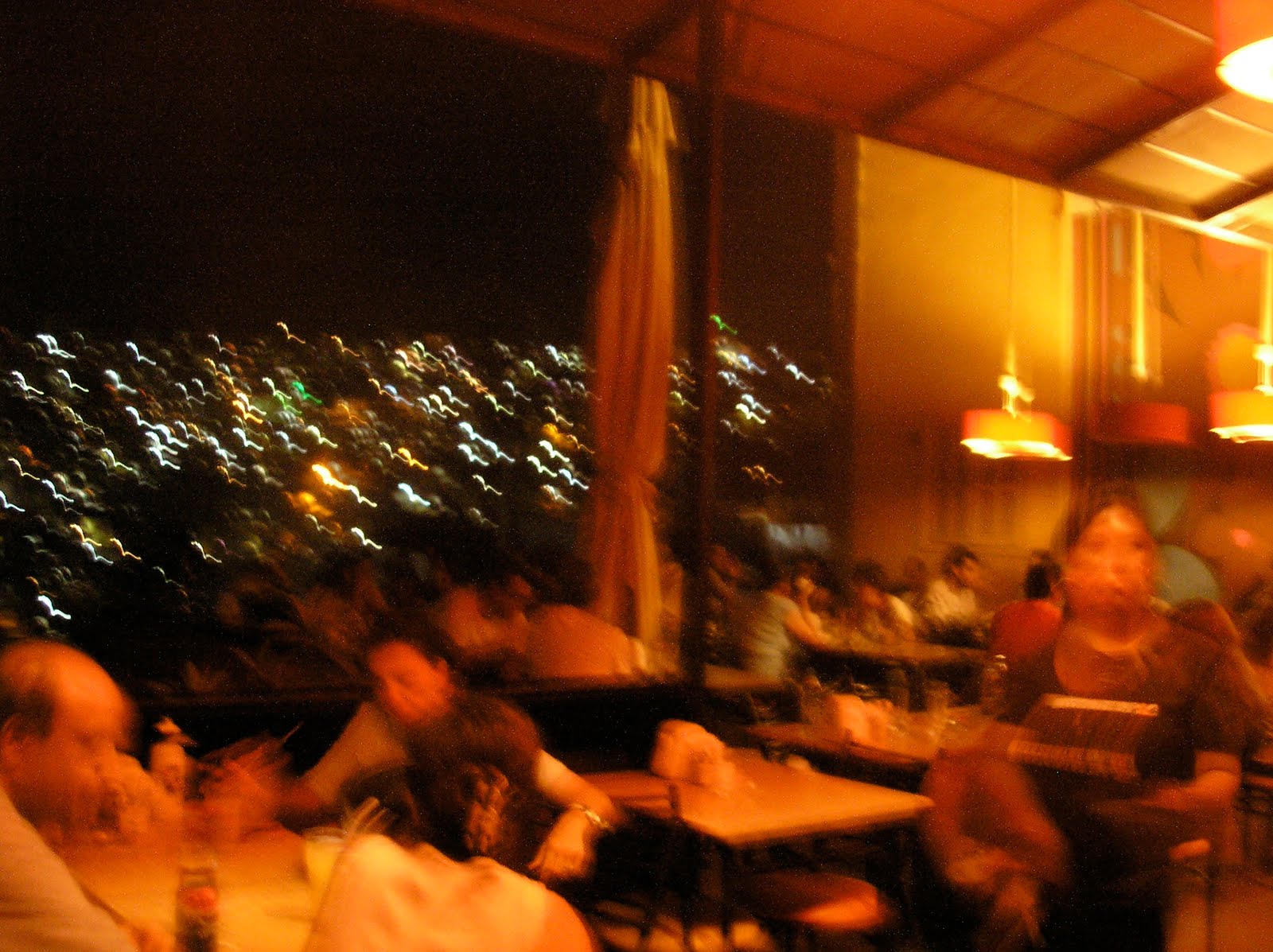
I am sitting on the patio of Books@ - a neighbourhood cafe-bookstore that has a breath-taking location on a hillside overlooking East Amman. Like every night this month, there's an endless spectacle of wedding fireworks from the nearby hilltops. The rush has been on for weddings the last couple of weeks - i think to get them out of the way before Ramadan begins this coming Wednesday. Or at least that is the only explanation I have for the non-stop nightly round of drums and gunshots and honking and fireworks. Tonight's displays have been particularly impressive. Meanwhile, people on the patio are lounging around on sofas or sitting at tables drinking tea or smoking argileh pipes. Or drinking beer - also something that won't be seen once Ramadan begins. The atmosphere is very relaxed; taking it easy is a pastime that people have honed to a fine art here. I am learning to get better at it myself. The heat definitely helps.
And this is where I encounter the eternal paradox, the circle that I cannot square in my head: how can a place so serene exist amidst so much turmoil? This past week saw an upswing in violence in Iraq with more rockets in Baghdad and a serious bombing in Basra. Several friends here whose work for the UN focuses on reconstruction in Iraq say the situation is definitely worsening - a couple of them just got back from (55 degree heat!) Baghdad and were very pessimistic about the situation. Meanwhile, last Tuesday, a serious border skirmish occurred between Israel and Lebanon - the first since 2006 - with 3 or 4 deaths and a lot of sabre-rattling from Hezbollah in the aftermath. Also last Tuesday, missiles shot from an unknown location in the Sinai desert targeting Eilat in Israel landed off course in the south of this country, in Aqaba. The story is similar to a news item from last April that I posted about. Only this time a person - a taxi driver - was killed and several more injured. The wife of a close colleague was in Aqaba for work that day (he is a very close colleague. He sits 18 inches away from me... and can hear me chew my lunch every day... poor dear) . The rocket landed on a taxi right outside the Intercontinental Hotel where she was staying. She could see the aftermath out the window.
And again, just like in April when this happened before, none of these events really raised eyebrows or generated conversation. I think a group of us chatted in an off hand way for about 5 minutes during a work break about the rocket landing in Aqaba and whether my colleague's wife was OK. Just a mild curiousity. We all just assumed that she was fine and there was nothing to worry about. Then we went back to work, reviewing excel spread sheets and pouring over aerial maps. I try and compare this reaction to what would have happened in the office in Toronto if one of my colleagues' spouses had been away on business and looked out the window of the Chateau Laurier in Ottawa, say, to see a taxi flattened by a scud missile and dead and injured people lying around. I venture to say that a lot of chatter - maybe even some tears of concern - would have been generated.
So it is all a bit strange. My general experience is that the reaction to gossip and minor events here is much more amplified that I am used to. Small slights often get blown out of proportion. But when it comes to things that would constitute 'big' or 'newsworthy' events in Canada - bombings, landslides, city-wide blackouts - they tend to get shrugged off as nothing more than the minor annoyances of everyday life. I even have to admit I kind of like the nonchalance.
But it still doesn't quite make sense to me. And I have to wonder, relaxing on the patio, whether I am continuing to play the role of the Sissy Spacek character in the film Missing. Am I witnessing some kind of distintegration? In it but not of it. I guess that's the eternal mystery of being here.
I am sitting on the patio of Books@ - a neighbourhood cafe-bookstore that has a breath-taking location on a hillside overlooking East Amman. Like every night this month, there's an endless spectacle of wedding fireworks from the nearby hilltops. The rush has been on for weddings the last couple of weeks - i think to get them out of the way before Ramadan begins this coming Wednesday. Or at least that is the only explanation I have for the non-stop nightly round of drums and gunshots and honking and fireworks. Tonight's displays have been particularly impressive. Meanwhile, people on the patio are lounging around on sofas or sitting at tables drinking tea or smoking argileh pipes. Or drinking beer - also something that won't be seen once Ramadan begins. The atmosphere is very relaxed; taking it easy is a pastime that people have honed to a fine art here. I am learning to get better at it myself. The heat definitely helps.
And this is where I encounter the eternal paradox, the circle that I cannot square in my head: how can a place so serene exist amidst so much turmoil? This past week saw an upswing in violence in Iraq with more rockets in Baghdad and a serious bombing in Basra. Several friends here whose work for the UN focuses on reconstruction in Iraq say the situation is definitely worsening - a couple of them just got back from (55 degree heat!) Baghdad and were very pessimistic about the situation. Meanwhile, last Tuesday, a serious border skirmish occurred between Israel and Lebanon - the first since 2006 - with 3 or 4 deaths and a lot of sabre-rattling from Hezbollah in the aftermath. Also last Tuesday, missiles shot from an unknown location in the Sinai desert targeting Eilat in Israel landed off course in the south of this country, in Aqaba. The story is similar to a news item from last April that I posted about. Only this time a person - a taxi driver - was killed and several more injured. The wife of a close colleague was in Aqaba for work that day (he is a very close colleague. He sits 18 inches away from me... and can hear me chew my lunch every day... poor dear) . The rocket landed on a taxi right outside the Intercontinental Hotel where she was staying. She could see the aftermath out the window.
And again, just like in April when this happened before, none of these events really raised eyebrows or generated conversation. I think a group of us chatted in an off hand way for about 5 minutes during a work break about the rocket landing in Aqaba and whether my colleague's wife was OK. Just a mild curiousity. We all just assumed that she was fine and there was nothing to worry about. Then we went back to work, reviewing excel spread sheets and pouring over aerial maps. I try and compare this reaction to what would have happened in the office in Toronto if one of my colleagues' spouses had been away on business and looked out the window of the Chateau Laurier in Ottawa, say, to see a taxi flattened by a scud missile and dead and injured people lying around. I venture to say that a lot of chatter - maybe even some tears of concern - would have been generated.
So it is all a bit strange. My general experience is that the reaction to gossip and minor events here is much more amplified that I am used to. Small slights often get blown out of proportion. But when it comes to things that would constitute 'big' or 'newsworthy' events in Canada - bombings, landslides, city-wide blackouts - they tend to get shrugged off as nothing more than the minor annoyances of everyday life. I even have to admit I kind of like the nonchalance.
But it still doesn't quite make sense to me. And I have to wonder, relaxing on the patio, whether I am continuing to play the role of the Sissy Spacek character in the film Missing. Am I witnessing some kind of distintegration? In it but not of it. I guess that's the eternal mystery of being here.
Friday, July 30, 2010
friends, neighbours
One of things that I love about living abroad - both now in Amman and elsewhere in the past - is how it forces me to confront myself and consider what I value on a daily - maybe hourly - basis.
This is a fairly banal observation, especially for those readers who have spent time living overseas. But coming to terms with different ways of being, finding out what parts of your lifestyle you can compromise on (vegetarian diet, clothing choice) and what things are fundamentally important to your quality of life (strong coffee, walking, tolerance) allows you to learn about your own limits and peculiarities and biases, every moment of every day. Insights that may require hours of determined journal-writing or piles of junky magazine self-help quizzes back home (Are you destined to succeed? What kind of female are you?) emerge self-evidently without having to think deliberately about them. It is something akin to introspection, only active and exhilirating. And exhausting. Your brain is working overtime, constantly processing all this new information - which translates into very sound sleep at night and vivid dreams - an added bonus.
At a certain point, after a few months, the state of wonderment decreases as you get used to a new normal - the fact that your colleague has two wives, or that giant cockroaches are living in your kitchen drains - but the potential for being truly surprised never really goes away. It is all a part of the full-body learning experience of living in a very foreign place
I knew all this before I came, but living it is another thing altogether. I was fully prepared to be surrounded - and even, in happy circumstances, embraced - by people with very different world views and backgrounds and opinions than my own. I was ready for that and excited by the prospect. What I absolutely didn't expect was that I would encounter someone exactly like me, with whom I have everything in common. And that has been its own amazing surprise and learning experience.
Paul, until yesterday, was my neighbour and colleague. He lives in Tucson, Arizona where he studies architecture, but has been spending time in Amman this summer working at the Institute where I work. Yesterday he left town for more adventures in London and Paris and New York before he heads back to Tucson. I will miss him. We saw a lot of each other. His (former) front door is about 12 feet from mine and his desk at work was about 20 feet away. For about 6 weeks straight we shared the same schedule: 8:10am walk to work; work all day; 5:30pm walk home and often in the evenings something social. Along the way, through the course of our time together, we covered a lot of ground - topographical and conversational.
It is fairly unremarkable to me that through our conversations it emerged that we share similar political views - liberal, green, socially progressive. Given our workplace, it is also not surprising that we have a a shared interest in buildings, housing, transportation. We are both cyclists and downtown city dwellers with a penchant for transitional urban neighbourhoods. It is even understandable to me that despite being from opposite ends of the same continent, and with a gap in age and a difference in gender, we share the same cultural references with an astounding overlap in the music we listen to, books we read, movies, blogs, websites, news items that we jointly draw upon. These are the external, contextual things that contribute to who we are, I guess, as a certain type of liberal, intellectual North American. Other preferences that we shared were endless: like a love of cats, or the sound of cottonwood trees rustling in the wind, or the slant of sunlight on Jebel Lwebdieh in the late afternoon. The list goes on and on.
But what was really a learning experience for me was seeing Paul's approach to the world - his way of breaking down a question and figuring out answers and his openness to the people and experiences around him. I learned a lot. Also about a certain north american logic. I realized that I bring it with me everwhere I go and it is the frame through which I interpret the world and connect with people. I guess I never really realized before how much I belong to my own culture. Or that I am "type" of person.
A couple of days before he left, Paul and I talked about the fact that we have so much in common, despite our obvious gender, age and geographic differences. He attributes it to growing up in the sticks with professional parents - something we have in common - and bicycles. I tend to agree with him.
I asked his permission to write this. I hope he doesn't mind what I have written. I will miss him and see this city a bit differently now as a result of his influence. Happy travels, friend!
Friday, July 16, 2010
not a drop to drink
Summer has hit. The thermometer has been hovering around 38 degrees C (101 F) in breezy, high-altitude Amman and a balmy 45 degrees C (113 F) in Aqaba, a bit further south. Friends in Baghdad are are reporting 50 degrees C. Despite high temperatures, I am finding the heat surprisingly easy to handle - zero humidity and just fine in the shade. With a nice cross breeze running through my un-air-conditioned apartment, it is actually more comfortable than my place in Toronto on a hot summer night (sorry, Briana).
It is the searing radiant heat of the sun at midday that is a whole new experience. A visitor recently commented that "the sun seems closer to the earth here... is that possible?". The image of a steak sizzling on a barbeque grill plagues my mind's eye when I think about exposed flesh in this weather. Not that there is much exposed flesh to be seen - at least among women. Dress codes remain in place no matter the temperature - which means it is loosely a policy of ankle to wrist to neck coverage out in public. I threw caution to the wind this week after returning from a meeting out of the office and - somewhat overcome by the baking midday heat - I took off my cardigan, revealing my bare arms in the office. Risque behaviour on my part?
This weather has me thinking about water. Partly because I am being very careful to drink a lot of it. Partly because the summer water shortages are on their way I am told and I try to imagine what it would be like to live in this heat without access to a reliable water supply. I am not sure I am looking forward to finding out. Water delivery - which currently happens once a week - can slow down in August I hear, or get rationed. But, to be frank, I am not sure I personally need to worry with my above average income. It is the many, many other residents of this city whose access to water is severely compromised that I wonder about.
A friend recently sent me a note wanting to know more about water in the region. He wrote: "... I noticed that the Dead Sea seems to be in two sections... Is this drying up? Or has it always been salt flats? This raised more questions in my mind... a post on water politics/culture would be interesting.... You mentioned in one post how on the infrastructure side 40% of water is lost through leakage, which suggests that waste is universal. But then, how can that be!!? In an area so dry why do they put up with leaks? On the water use side, surely people don't take 15 minute showers, leave the taps running to get the coolest/hottest water? Who goes without water? How costly is water?"
So, here I go, trying to say a few insightful things about a very complicated topic:

Water is scarce. The Dead Sea is drying up and by good estimates will be gone in 25 years at the present rate of evaporation. Most of the water in the Jordan river - which runs as a mere trickle now into the Dead Sea at the north end - is either diverted for agriculture in Israel or Jordan - or is collected in water treatment plants for drinking water in arid Amman. Similarly the streams that run through the deep, dramatic canyons on the east side of the Dead Sea - where I have been hiking over the last two weekends: they used to be tributaries, but now when these streams reach the flats just before the Dead Sea, they are piped and channeled to a water treatment plant, and then pumped a kilometer up hill to the thirsty city.
So, here I go, trying to say a few insightful things about a very complicated topic:
Water is scarce. The Dead Sea is drying up and by good estimates will be gone in 25 years at the present rate of evaporation. Most of the water in the Jordan river - which runs as a mere trickle now into the Dead Sea at the north end - is either diverted for agriculture in Israel or Jordan - or is collected in water treatment plants for drinking water in arid Amman. Similarly the streams that run through the deep, dramatic canyons on the east side of the Dead Sea - where I have been hiking over the last two weekends: they used to be tributaries, but now when these streams reach the flats just before the Dead Sea, they are piped and channeled to a water treatment plant, and then pumped a kilometer up hill to the thirsty city.
A sample conversation: I am talking to the director of planning of a major city in the North about the impacts of scattered sprawl development on the water supply especially with the enormous growth in population expected in the coming years. I point out that this city is surrounded by the most fertile, rain-fed agricultural lands in the whole kingdom and sitting on an underground aquifer. We talk about why it is important to conserve those agricultural lands, and maintain the natural heritage cover to allow for water re-absorption, maintain soil permeability, minimize the need for irrigation. She stares at me blankly. I ask her: "Where will the water come from to keep this city alive if you don't protect those resources?" She tells me: "Industry is the problem. they use too much water. If it becomes a big problem, we will close them down. And for people? Well, for people, for drinking, God will provide. He always has."
This fills me with a sense of dread and fear. Currently annual per capita water distribution in Jordan stands at 150 cubic metres per person, well below the international water poverty line of 1,000 cubic metres. With rapid population growth, no one I have talked to has a sense of how this will look in 15 years - let alone 50.
I recently read in the newspaper that the price of water is going up. This is politically tricky as so many people on limited incomes have scarce access to water. The story reported that the hike in the prices of water is part of a three-year plan to address the government's budget deficit. It has nothing to do with pricing the resource to reflect its full cost. The story also notes that "an average of 42 per cent of the water pumped to the public is wasted - the figure varies from place to place - 35% wastage in Amman; 22% in Aqaba, 65% in some regions." The Minister responsible says that the water loss is due to illegal trespassing - people stealing from the water grid. My colleagues also blame bad pipes that are very frequently above ground and easily subject to breakage and leakage. Why does this happen? Why aren't there more water conservation, water capture, grey water recycling, water infrastructure improvement projects at the small and micro-scale? This is a mystery that I think about daily. Part of it is a lack of organizational know-how at the municipal and national scale; part of it is the structure of the industry; part of it is a sheer lack of access to capital.
Instead big infrastructure projects dominate: a giant red-dead sea channel that will generate hydro electric power and purportedly restore water levels in the dead sea (notwithstanding the inter-basin transfer!) is in the feasibility study stage with world bank money. A very large pipeline is being built from Aqaba to Amman to tap the last large underground aquifer in the country.
People do talk about water a lot. Which part of town has good water pressure; why it is best to live lower down in an apartment building - ground floor best, water pressure highest; where the best swimming pools and spas are. They share tips about getting the hot water from the boiler on the roof to the shower faster - flush the toilet at the same time as running the shower; do the dishes right before you have the shower and the hot water will be on stream. Otherwise you are running the shower for 15 minutes before you can even get in.
These are probably the conversations of the urban affluent. I honestly have no clue how the water supply works in poorer East Amman, even less what it is like in bedouin communities in the desert or for the Egyptian farm labourers who live in tents in the Jordan valley. Driving through the southern desert the last few weekends, I have seen water tanker trucks parked beside the bedouin goat-hair tents, the sheep and goats lying in the shade the truck affords - the only shade around - the camels hanging around farther afield.
These trucks - often the only motorized vehicles in the vicinity - must serve the needs of the whole travelling unit, I figure - the humans, the livestock, washing, drinking needs. They must be the supply for a long haul - a week? two? a month? - and I am guessing that they are driven along to the next campsite when the herds move. I cannot imagine how much that water must cost. And now that the summer heat is here, that much more expensive.
Monday, July 5, 2010
Paying Rent
It is the beginning of another month - my eighth one here - and that means it is time to pay the rent. I look forward to this event, all the more so because it is a tricky feat to accomplish. First, I live in a cash economy - no cheques - so I have to accumulate the right amount of cold hard cash over the course of the month. This means taking it out in the allowable small increments from the bank machine - when it happens to be working - and remembering to store up 50 dinar bills over the course of the month, like a squirrel preparing for winter. Second, I need to be in the building at the right time - when the owner is here and the office door is open. The office hours are unpredictable - non-existent, actually - and I need to watch out or else weeks will go by and I will suddenly wake up to the fact that I owe 2 months back rent plus utilities.
So around the beginning of the month, when I see that office light on, I dash up to my apartment, grab the envelope full of cash, head back downstairs and walk through a dark hallway filled with old broken furniture and other detritus into the back office of Abu Mohammed.
Abu Mohammed is the building owner. His name is Mahmoud and the "Abu" title literally means "Father of" which is both a mark of respect and an indication that he has a son named Mohammed. He is a large man, in his mid 60s, who looks like he has done his share of heavy manual labour. In contrast to his appearance, he has a gentle voice and an elaborately polite manner, bordering on deferential. He conveys a certain simplicity. He is the opposite of the polished, expensively dressed people I deal with in my day job, those with perfect English and excellent degrees from foreign universities. Sitting behind the scratched wooden desk in his dusty, cramped office, you could easily think that this is a hard-working labourer who had the good fortune to build an apartment building in a part of town that has now become popular. And here he is now reaping the benefits.
But things are not what they seem. The lesson I learn approximately 2 times every day in this country.
In fact, this lovely unpreposessing man has a major contracting business with an expertise in energy projects and is involved throughout the Gulf and east Africa. The apartment building is a little tiny side project that he keeps going for no discernable reason except as a place to store old furniture - and a good little investment. When I get that chance once a month, I like to sit with him in his office, and have a chat to hear the latest news about contracting jobs in the middle east. They are mysterious and amazing. Yesterday, he reported that he was just back from 30 days away - 20 days in Abu Dhabi, 10 days in Sudan where has managed to secure financing from a Swiss Bank with a big pile of Emirate money to build a solar energy project in Sudan. This is in partnership with a Chinese state company who are bringing in the technology. "I will have a labour of thousands of people, Miss Hannah. It is a very big project for me." All the paperwork is signed - he showed me - which is why he had to go to Sudan - to chase down some signatures.
We talked about what it is like to work in Sudan. "Hot" is one word. "Miss Hannah - it is 60 degrees in the sun and so dusty and dirty. The roads are just from sand, no asphalt, dust everywhere."
This constellation of Abu Dhabi - Chinese - Sudanese interests - with a little Swiss Bank thrown in on the side - fascinates me, of course. All the more so since I am currently reading the (very good) book "What is the What?" by Dave Eggers about refugee children in Sudan. Place names like Darfur come to mind. Do people do business in this place? It seems so. I try and ask him political questions - what does he think about the outcome of the recent election in Sudan? Are people discussing the separation of Southern Sudan from the North? - that sort of thing - but he never takes the bait and remains unfailingly polite. I remain fascinated and somewhat uncomfortable.
As we chat, his nephew sits on the side, like a character from Charles Dickens, making elaborate notes in a giant ledger book where all of the apartment transactions are duly recorded. And various renters and other petitioners come and go to pay money or just pay respects.
After 15 or 20 minutes, my time is up, and - honestly - he has better things to do than satisfy the curiousity of nosy Canadian. But he is deferential and gracious and we part with many repeated "go in peace" salutations until rent time comes around next month and I hear more about building big infrastructure projects in hot, distant lands.
So around the beginning of the month, when I see that office light on, I dash up to my apartment, grab the envelope full of cash, head back downstairs and walk through a dark hallway filled with old broken furniture and other detritus into the back office of Abu Mohammed.
Abu Mohammed is the building owner. His name is Mahmoud and the "Abu" title literally means "Father of" which is both a mark of respect and an indication that he has a son named Mohammed. He is a large man, in his mid 60s, who looks like he has done his share of heavy manual labour. In contrast to his appearance, he has a gentle voice and an elaborately polite manner, bordering on deferential. He conveys a certain simplicity. He is the opposite of the polished, expensively dressed people I deal with in my day job, those with perfect English and excellent degrees from foreign universities. Sitting behind the scratched wooden desk in his dusty, cramped office, you could easily think that this is a hard-working labourer who had the good fortune to build an apartment building in a part of town that has now become popular. And here he is now reaping the benefits.
But things are not what they seem. The lesson I learn approximately 2 times every day in this country.
In fact, this lovely unpreposessing man has a major contracting business with an expertise in energy projects and is involved throughout the Gulf and east Africa. The apartment building is a little tiny side project that he keeps going for no discernable reason except as a place to store old furniture - and a good little investment. When I get that chance once a month, I like to sit with him in his office, and have a chat to hear the latest news about contracting jobs in the middle east. They are mysterious and amazing. Yesterday, he reported that he was just back from 30 days away - 20 days in Abu Dhabi, 10 days in Sudan where has managed to secure financing from a Swiss Bank with a big pile of Emirate money to build a solar energy project in Sudan. This is in partnership with a Chinese state company who are bringing in the technology. "I will have a labour of thousands of people, Miss Hannah. It is a very big project for me." All the paperwork is signed - he showed me - which is why he had to go to Sudan - to chase down some signatures.
We talked about what it is like to work in Sudan. "Hot" is one word. "Miss Hannah - it is 60 degrees in the sun and so dusty and dirty. The roads are just from sand, no asphalt, dust everywhere."
This constellation of Abu Dhabi - Chinese - Sudanese interests - with a little Swiss Bank thrown in on the side - fascinates me, of course. All the more so since I am currently reading the (very good) book "What is the What?" by Dave Eggers about refugee children in Sudan. Place names like Darfur come to mind. Do people do business in this place? It seems so. I try and ask him political questions - what does he think about the outcome of the recent election in Sudan? Are people discussing the separation of Southern Sudan from the North? - that sort of thing - but he never takes the bait and remains unfailingly polite. I remain fascinated and somewhat uncomfortable.
As we chat, his nephew sits on the side, like a character from Charles Dickens, making elaborate notes in a giant ledger book where all of the apartment transactions are duly recorded. And various renters and other petitioners come and go to pay money or just pay respects.
After 15 or 20 minutes, my time is up, and - honestly - he has better things to do than satisfy the curiousity of nosy Canadian. But he is deferential and gracious and we part with many repeated "go in peace" salutations until rent time comes around next month and I hear more about building big infrastructure projects in hot, distant lands.
Subscribe to:
Posts (Atom)